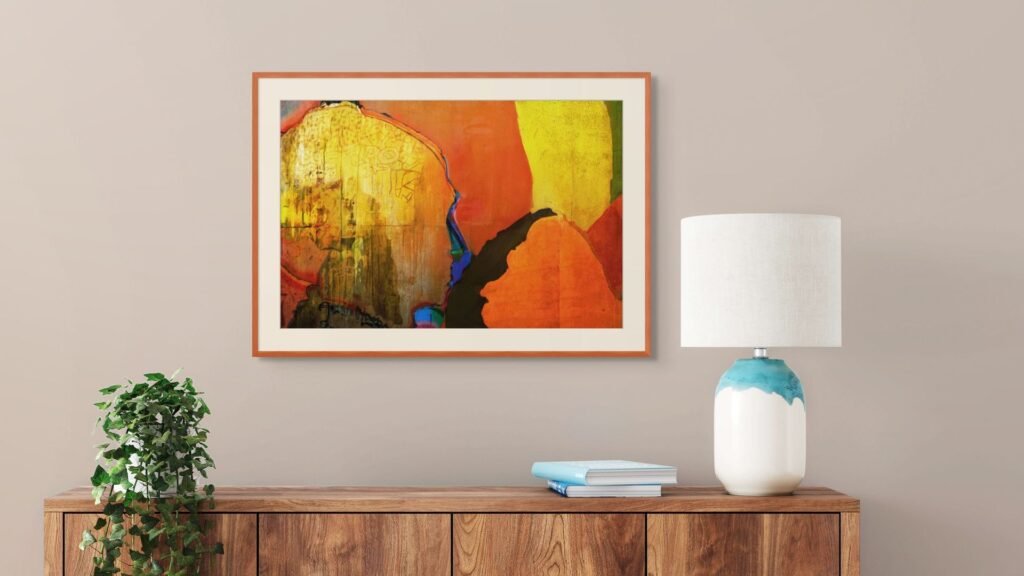
Long before I began making art, I worked as an architect and led an interior design practice. Over the years, clients frequently asked how to improve a room without replacing furniture or undertaking a renovation. My answer rarely changed: thoughtful artwork does more for a space — and more quickly — than almost anything else.
Most rooms begin with practical decisions — the sofa that fits, the table that works, the lighting that doesn’t compete with everyday life. But when people talk about a room they love, they rarely mention the furniture first. They talk about what the room feels like.
Artwork is often the catalyst for that shift. A well-chosen piece gives a room depth, tone, and a point of view. Unlike more functional furnishings, art delivers atmosphere. It shapes how a space is experienced from morning to night. And despite the assumptions that keep many people from exploring it, high-quality artwork can be approachable, personal, and surprisingly affordable.
Here’s a room-by-room guide to adding art to your spaces in ways that elevate a home without overcomplicating it — with examples drawn from my own collections where they naturally apply.
Living rooms benefit from artwork with more presence — not necessarily louder, but more certain of itself. This is often where a home expresses its personality most clearly, and where a single piece can become the visual anchor that connects color, form, and proportion.
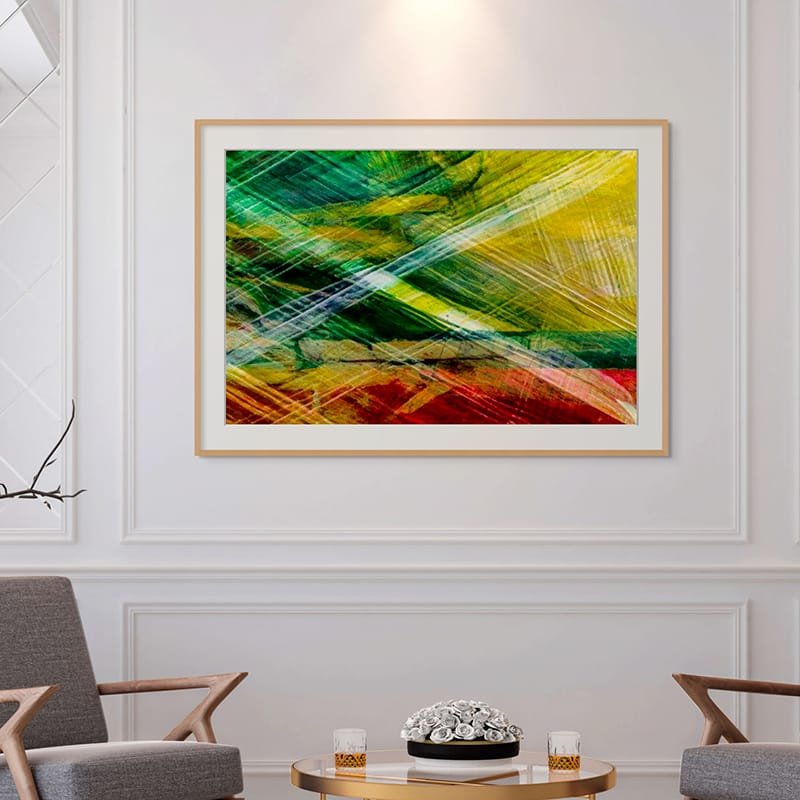
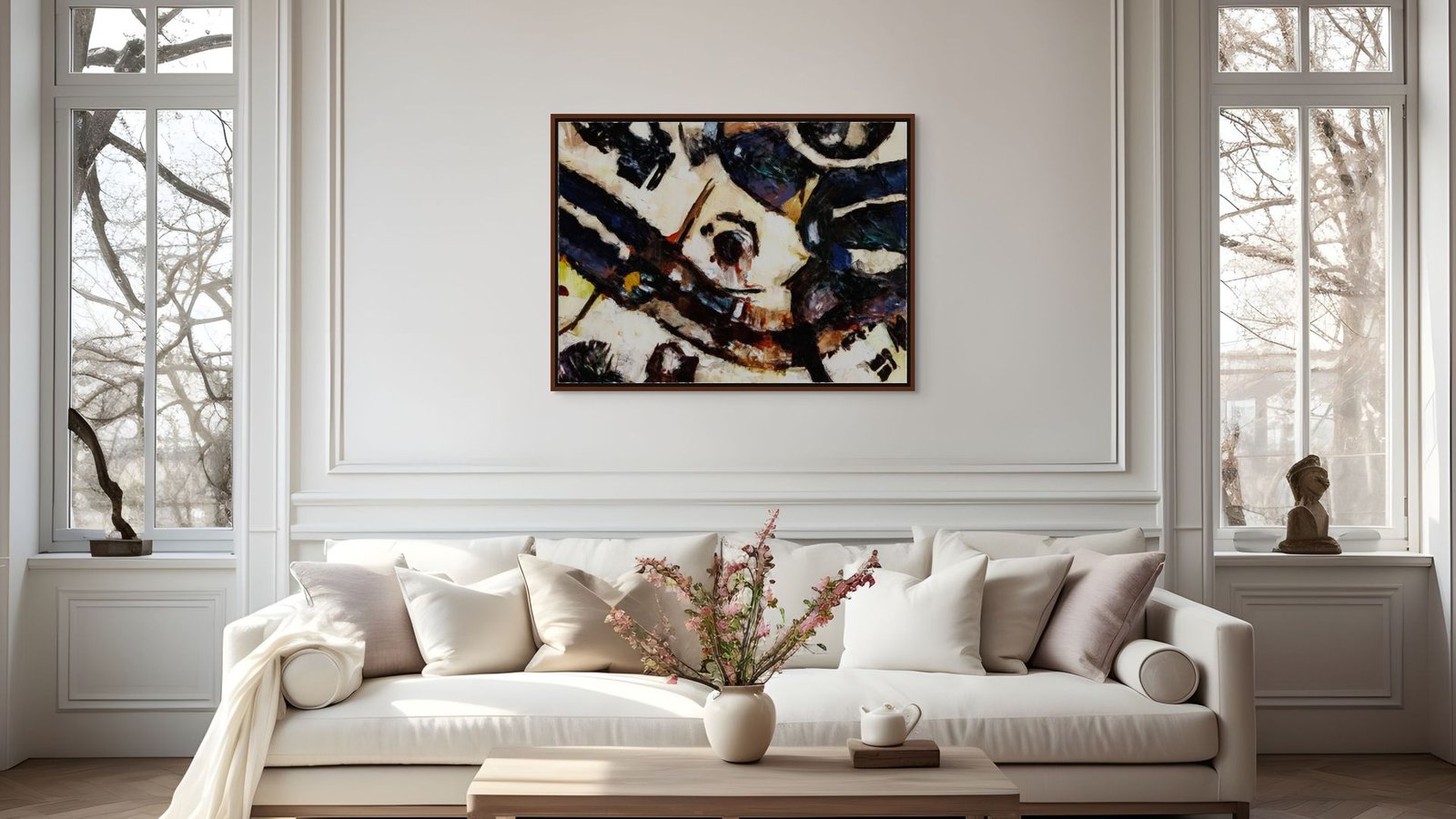
Bolder mark-making, expressive portraits, or striking compositions work well here. A dynamic piece from the Brush Strokes series, with its interplay of gesture and digital layering, can establish a point of energy. A portrait from Painted Faces introduces narrative tension — a presence that changes how a room feels even when no one is speaking.
Living rooms don’t need art that “matches.” They need art that conveys a point of view.
No space is more overlooked — or more easily transformed — than a hallway. By their nature, hallways are transitional; we pass through them without looking. But they offer an opportunity for quiet visual rhythm, a sequence that reveals itself gradually in motion.
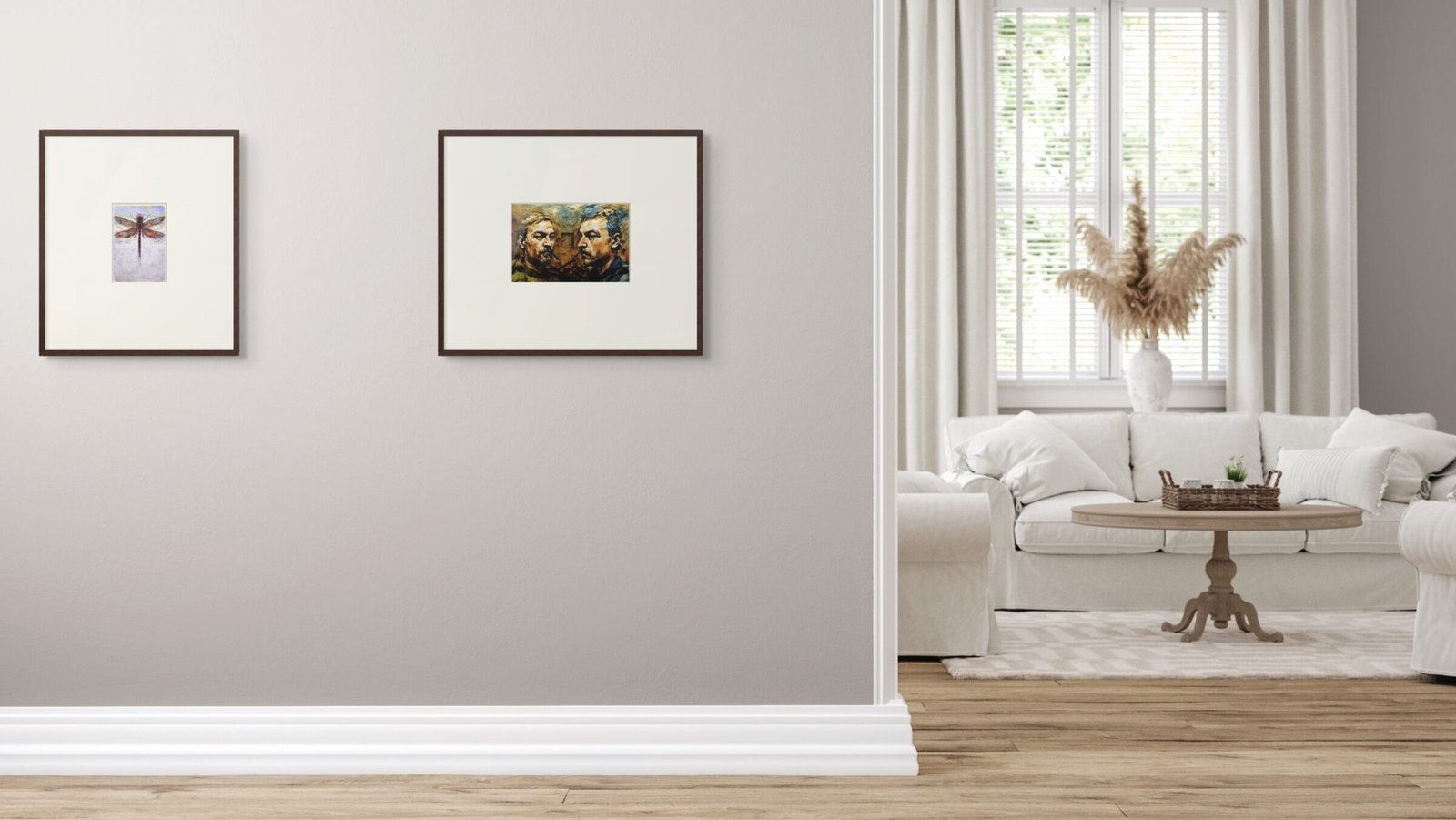
Smaller works or pairs of related pieces can bring a sense of continuity. Textural pieces, especially those with layered depth, work beautifully here because they reward proximity. A viewer sees something different each time — a shift in light, a detail previously missed.
When treated intentionally, even ten feet of wall becomes an experience rather than an afterthought.
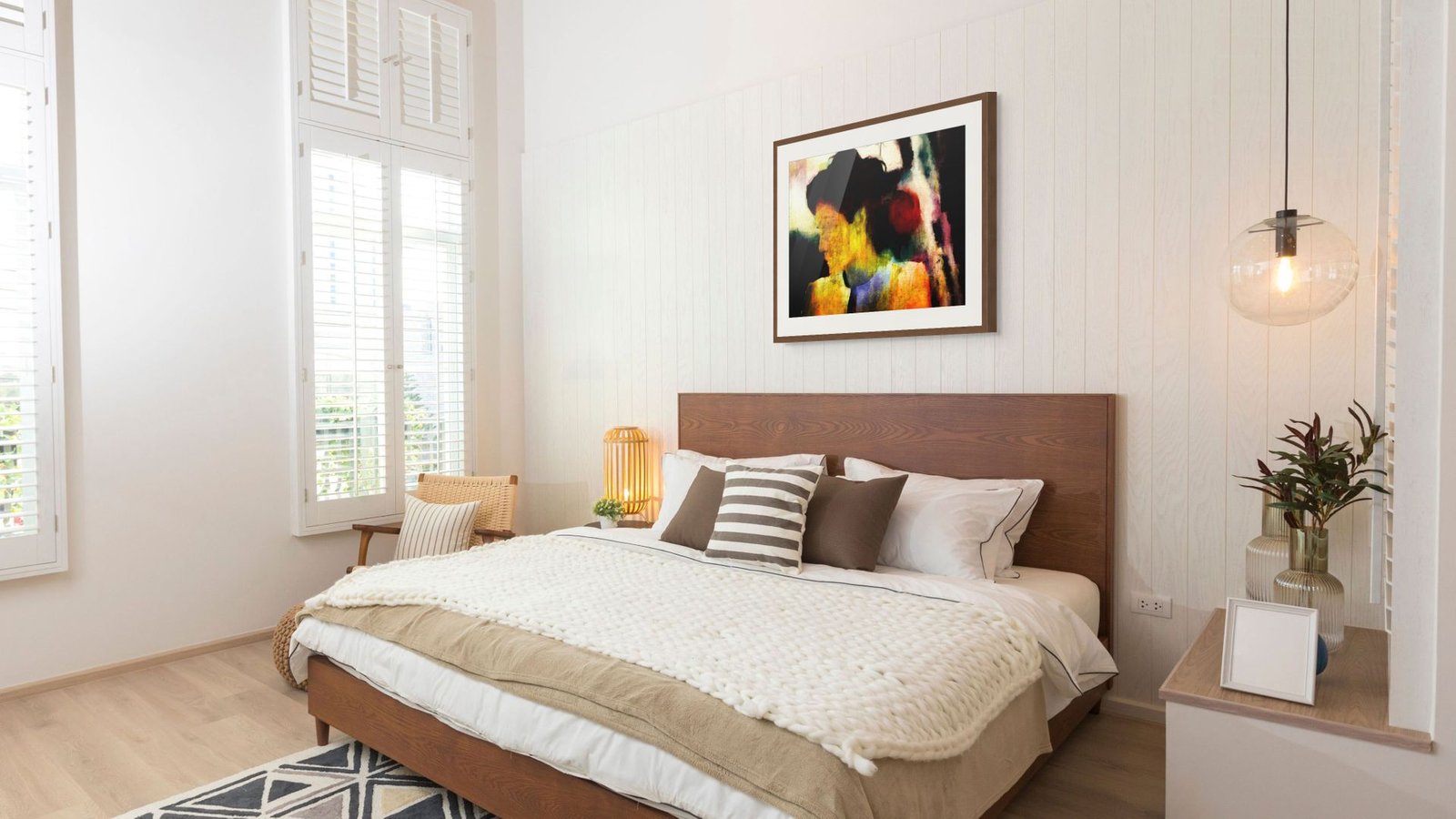
Bedrooms reward restraint. If the living room holds a home’s public expression, the bedroom offers its counterpoint — private, quiet, spare by intention. The best artwork here doesn’t demand attention; it settles into the space, softening edges and setting an emotional temperature.
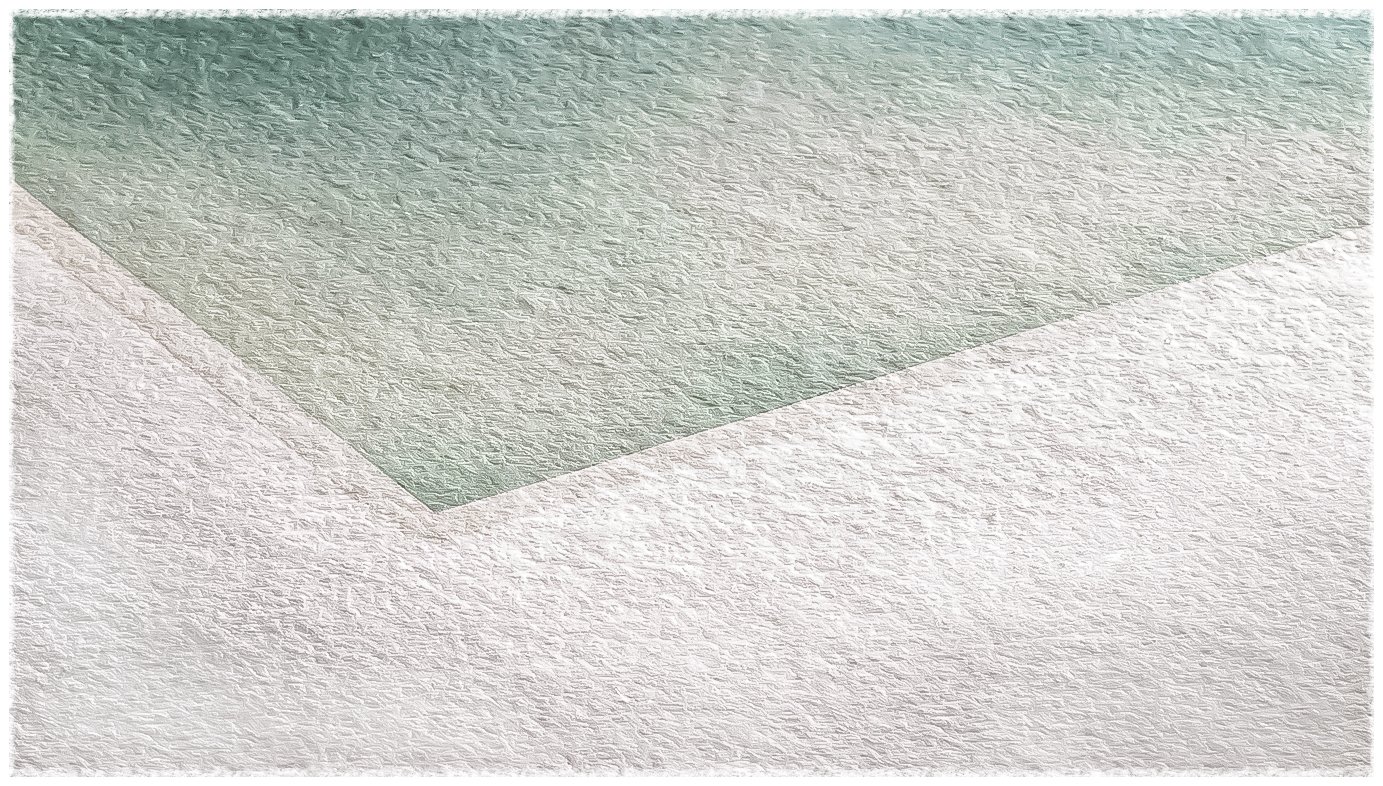
Pieces with layered textures or subtle tonal shifts work especially well. They echo the unhurried pace of early mornings and late evenings. Works from my Exploring Texture collection, for instance, use accumulated marks and atmospheric blending to create a sense of stillness without slipping into neutrality. They invite contemplation without intruding on it.
The idea is simple: art that shapes the mood without claiming the room.
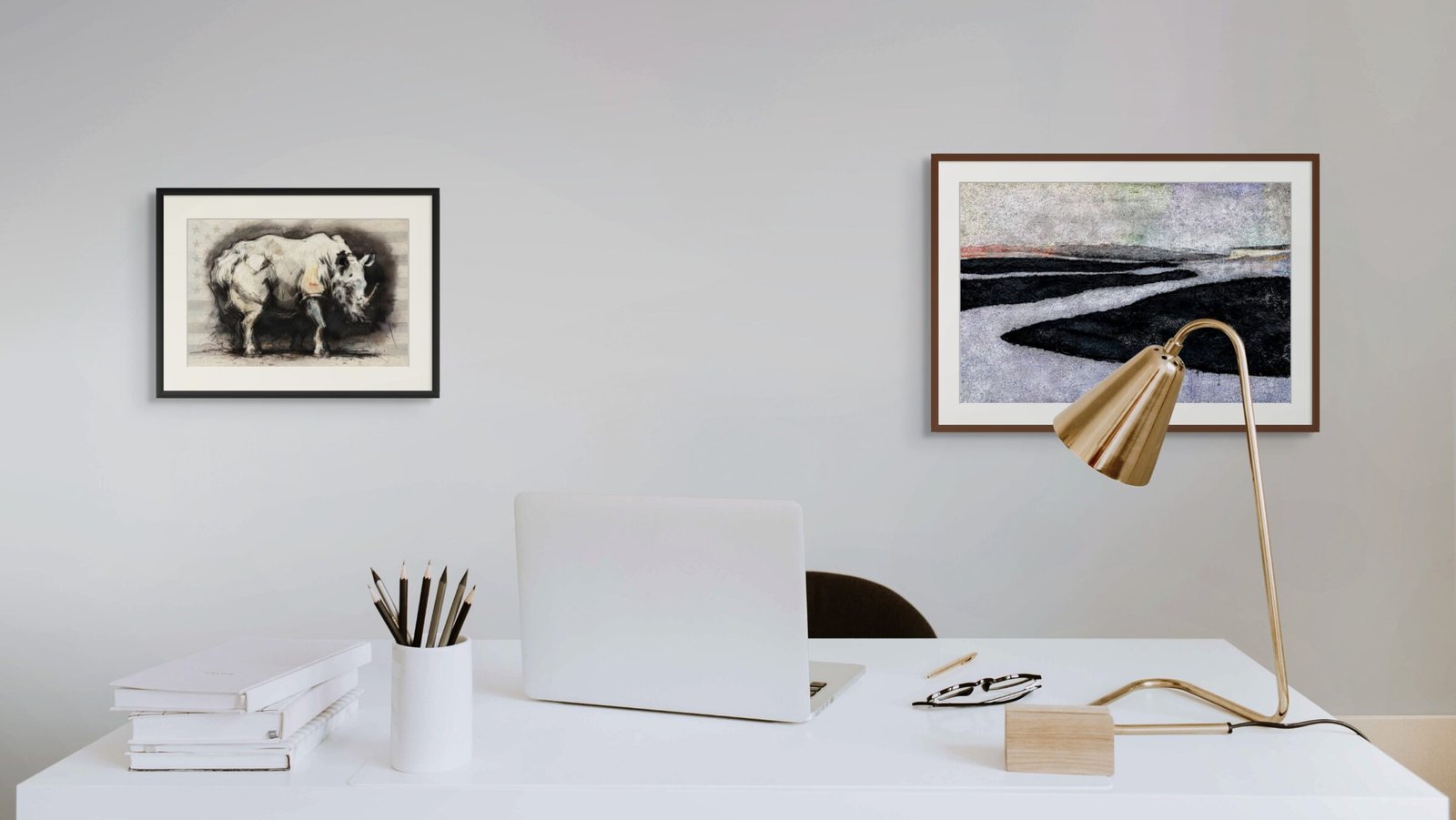
The rise of home offices has created a new category of need: art that can sit comfortably behind a laptop screen while also functioning as a companion during long stretches of focused work. Artwork also communicates something about your professional persona. Think about what quality art in the background of someone’s Zoom window or vlog post has conveyed to you about their taste and sophistication.
These spaces call for pieces with clarity — something visually rich but not overwhelming. Expressive works with clean compositional structure, or portraits with a contemplative sensibility, can add a grounding presence. Here, art isn’t decorative; it becomes part of one’s psychological workspace.
Art brings texture to the daily routine, and in a room defined by productivity, a little atmosphere goes a long way. Artwork in a home office also reminds you that you value both your environment and the work you do within it.
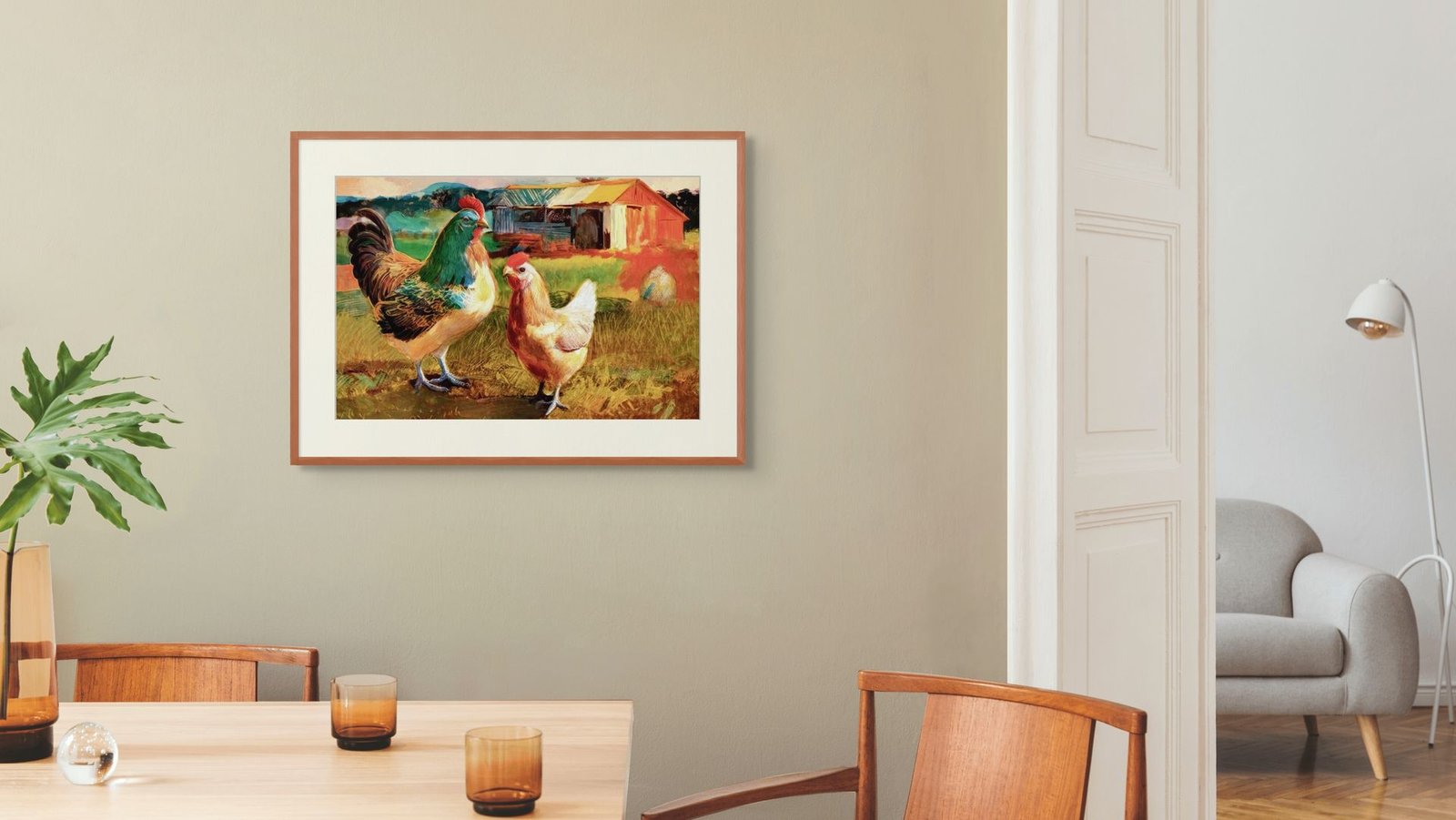
Kitchens and the informal places where people actually eat — a small table tucked beside the counter, a breakfast bar with stools, a corner nook that catches the morning light — are some of the most emotionally charged spaces in a home. They’re where days begin, where quick conversations happen, where people decompress in the evening. Yet they’re often the last places where art is considered.
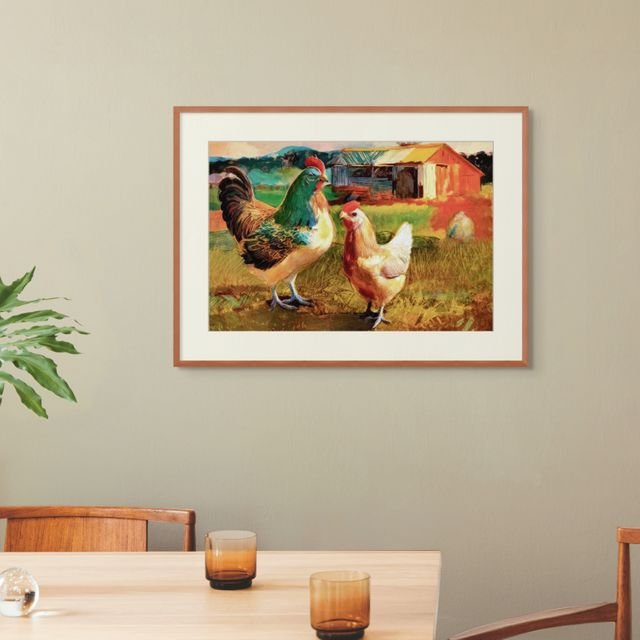
These areas benefit from artwork with a lighter, more playful tone. Pieces with warmth, humor, or gentle whimsy can set the tone for the day and offer a soft landing in the evening. Works like Chickens Escape or Boys Love Water introduce a sense of personality and optimism without overwhelming a compact space.
Because kitchens tend to be visually busy — appliances, utensils, textures, and movement — art here should feel like a punctuation mark rather than a headline. A touch of narrative or levity can cut through the functional clutter and make everyday rituals feel more intentional. And in smaller homes or apartments, this is often where guests gather first, even unintentionally — making it an ideal spot for a piece that simply makes people smile.
Many people assume that quality art must be rare, expensive, or purchased in a gallery with white walls and a serious receptionist. That isn’t true. But there is a critical difference between a piece of art that elevates a room and one that feels like an afterthought.
It comes down to the materials and methods used by the maker.
Fine-art prints on archival, mold-made papers have a tactile depth that mass-market décor can’t replicate. The slight tooth of the paper, the way pigment settles into it, the subtle shadow cast by a deckled edge — these qualities give a fine-art print the presence of an object of value rather than an image.
Moreover, this printing process does not lend itself to mass production. The printers themselves are extraordinary pieces of engineering, costing many times more than even the most advanced consumer or office equipment. Prints are produced slowly — one at a time — rather than at the high speeds used to create posters or art books. Each image also requires a careful setup and proofing process, during which adjustments are made and the final result is reviewed and approved by the artist. The result is a print that carries the intention and care of a studio practice, rather than the efficiency of an industrial workflow.
Pairing a print with a thoughtful mat and frame further elevates the piece, allowing it to communicate with the room rather than merely occupy wall space. And because this process remains more accessible than purchasing one-of-a-kind originals, it opens the door to collectors at all stages — including those simply hoping to live with better art.
I prefer archival pigment inks made from microscopic solid particles that sit on the surface of the paper and bond with its fibers. Unlike dyes, they resist fading caused by light and atmospheric pollutants.
I print on 100% cotton rag — the same material museums use. It is acid-free, remarkably durable, and has a subtle texture that gives the image a depth and richness you simply don’t get from mass-produced posters, even those sold in museum shops.
Transforming a space into a place you love to inhabit doesn’t require a renovation or even a redesign. Often, it begins with one piece of art placed with intention: a meditative, textural work that slows the mood of a bedroom, a portrait or landscape that defines the living room, a set of quiet images whose details give one’s transit through a hallway purpose.
Art has the ability to redefine the character of a room in ways that furniture and lighting alone cannot. It doesn’t need to be loud, or expensive, or even large. It simply needs to reflect an awareness that the character of spaces, like the character of people, arises from the interplay of their component parts.
Start with one wall, one corner, or one moment of curiosity. The transformation often begins there.