How Storytelling Shapes My Art

When I begin a new piece, I’m rarely responding only to what I see. More often, I’m responding to what I imagine. A posture caught mid-stride, a figure turned slightly away, the way someone occupies space — these fragments have a way of pulling me into quiet, invented narratives.

It’s the same impulse that leads us to imagine the life of a stranger glimpsed through a car window or seated alone at a café table. In the studio, that impulse becomes a kind of companion. As I draw or paint, the imagined story begins to shape the work, influencing decisions about color, scale, texture, and emphasis, often before I’m fully aware of it.

I don’t think of these narratives as explanations of the image. They are more like undercurrents — present, guiding, but never fully visible. What matters most is that they leave space. The finished work is not meant to tell a complete story, but to invite one. In that sense, the act of storytelling belongs as much to the viewer as it does to me.

The Artist–Art Partnership:
Spontaneity in Creation

What I value most about working this way is the spontaneity it introduces — and protects — in the studio.

As an image develops, there’s often a moment when it begins to resist me. A mark feels wrong. A figure refuses to resolve. At that point, the work starts to behave less like an object and more like a presence. I find myself responding to it, adjusting course, negotiating. The process becomes a quiet dialogue rather than a series of decisions executed according to a plan.

The narrative, such as it is, rarely arrives whole. It unfolds gradually, sometimes contradicting earlier assumptions. I’m often less interested in directing that arc than in staying attentive to it. Following the image as it reveals itself keeps the work alive — and keeps me engaged in a state of discovery rather than execution.

Case Study:
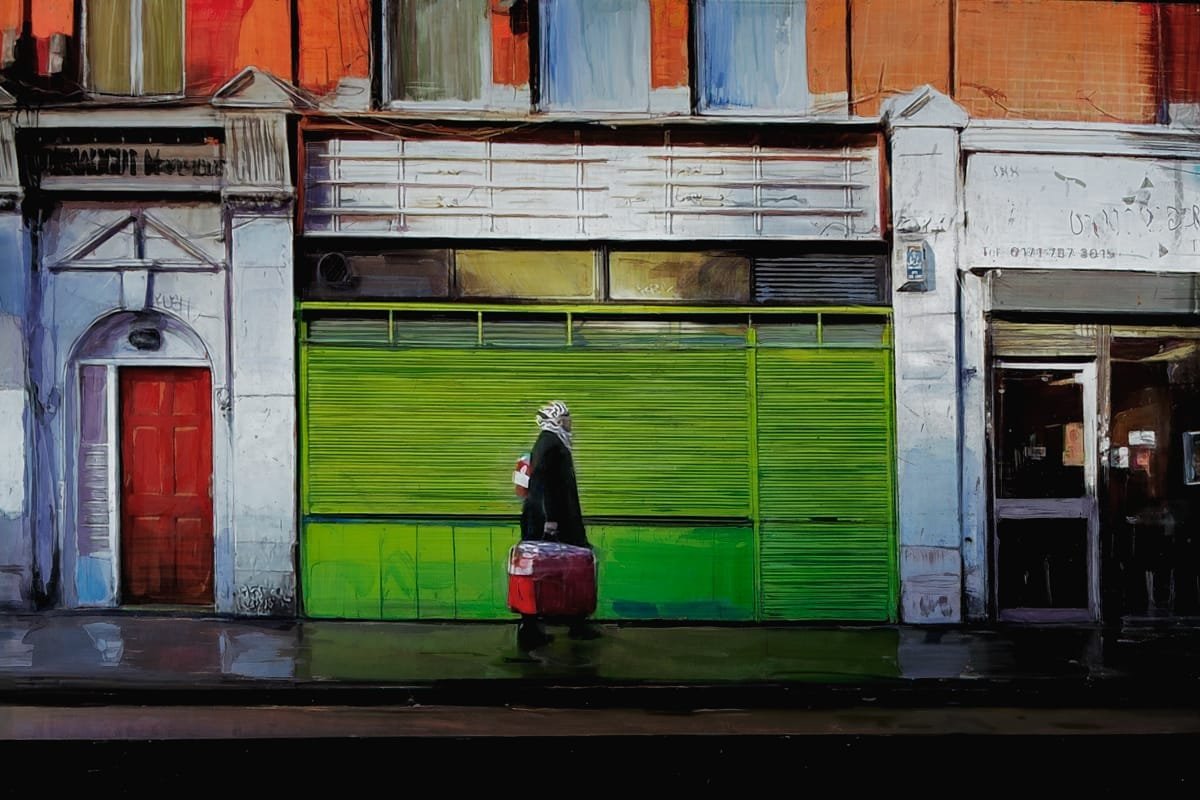
Man With Suitcase

A colorful contemporary artwork depicting a lone traveler with a suitcase walking down a sidewalk
A solitary figure moves forward through a deteriorating streetscape, carrying only what he can hold. Bright color and sunlight contrast with a sense of uncertainty.

Man With Suitcase depicts a small figure striding past a shuttered storefront, moving with quiet determination. His scale within the composition suggests vulnerability, yet his posture resists it. Bright, optimistic color presses against a backdrop of peeling paint and graffiti-covered facades.

As the piece developed, the figure began to feel like someone without a fixed home — a migrant, perhaps — moving through the city not with self-pity, but with resolve. I imagined where he might be going, what he carried inside the suitcase, and what kind of life might lie just beyond the frame. I imagined the street after rain, the clarity that comes when clouds lift and the air sharpens.

None of this is spelled out in the image itself. The story remains open. But the tension between deterioration and forward motion, between instability and purpose, grew directly out of that imagined context. What remains visible is a sense of movement — not away from something, but toward something unknown.

Case Study:
The path from thoughts to dreams

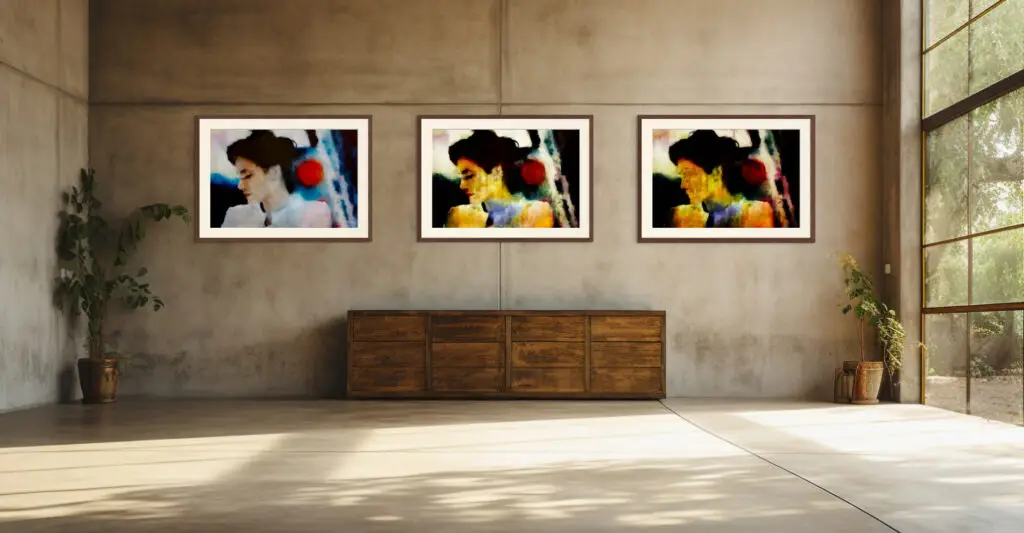
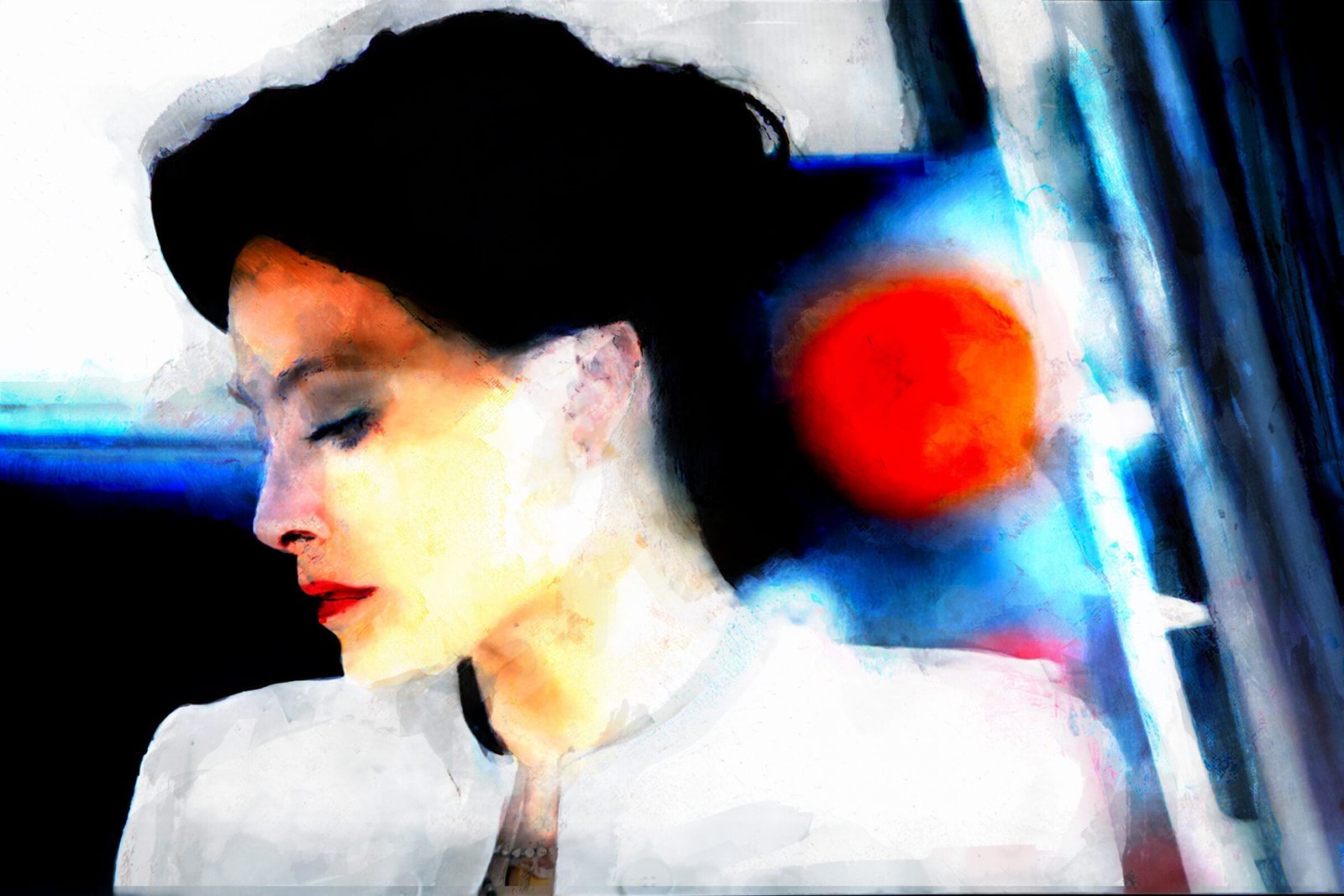
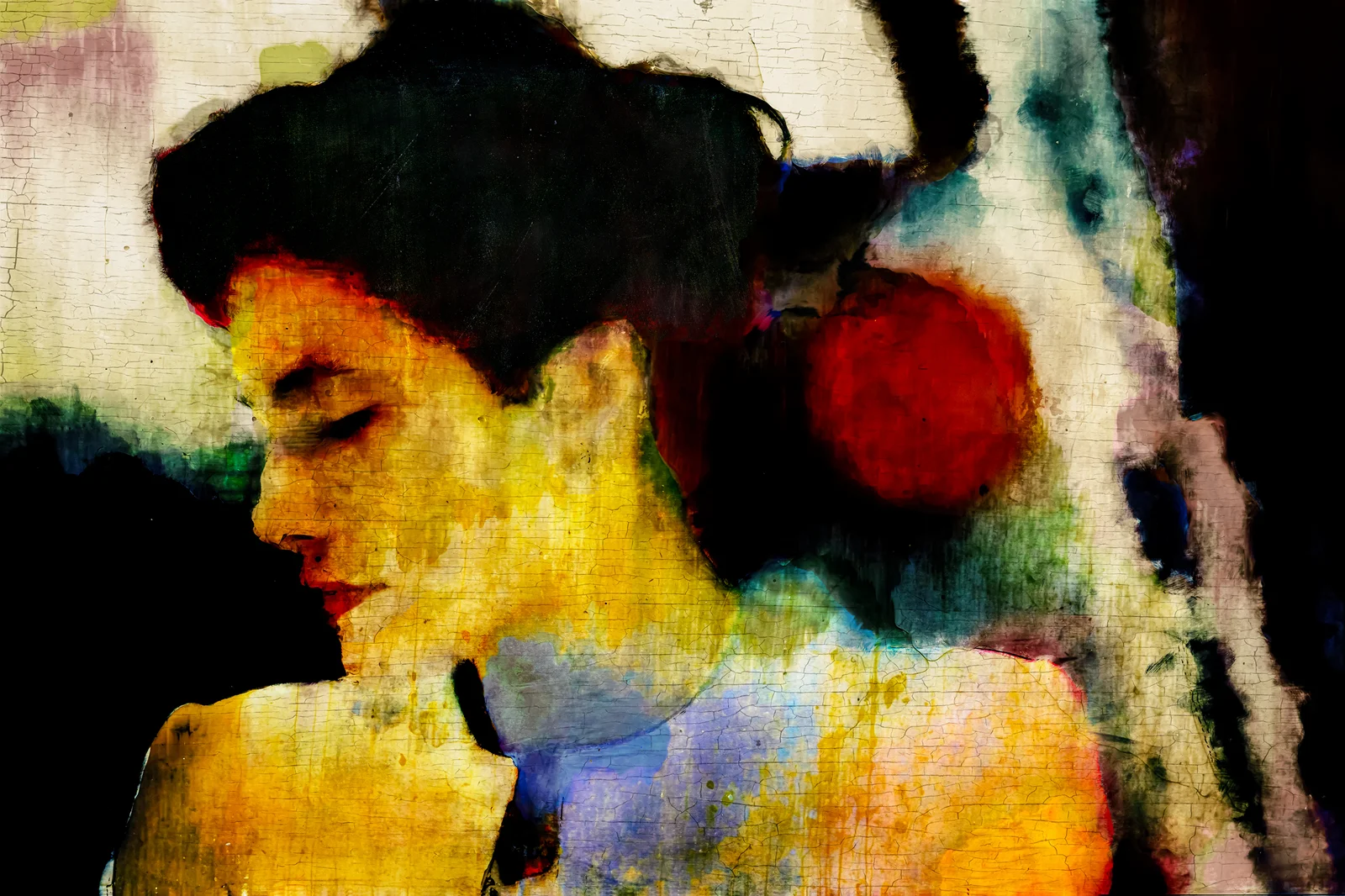
This series began with a fleeting snapshot of a woman seated in the back of a London cab. The initial image, later titled Pause, was rendered as a watercolor and stayed relatively close to the photographic source. She appears awake but withdrawn, her attention turned inward as the city passes beyond the window.

A colorful contemporary artwork depicting a woman's head in profile
PAUSE: A woman suspended in a moment between cerebral destinations.
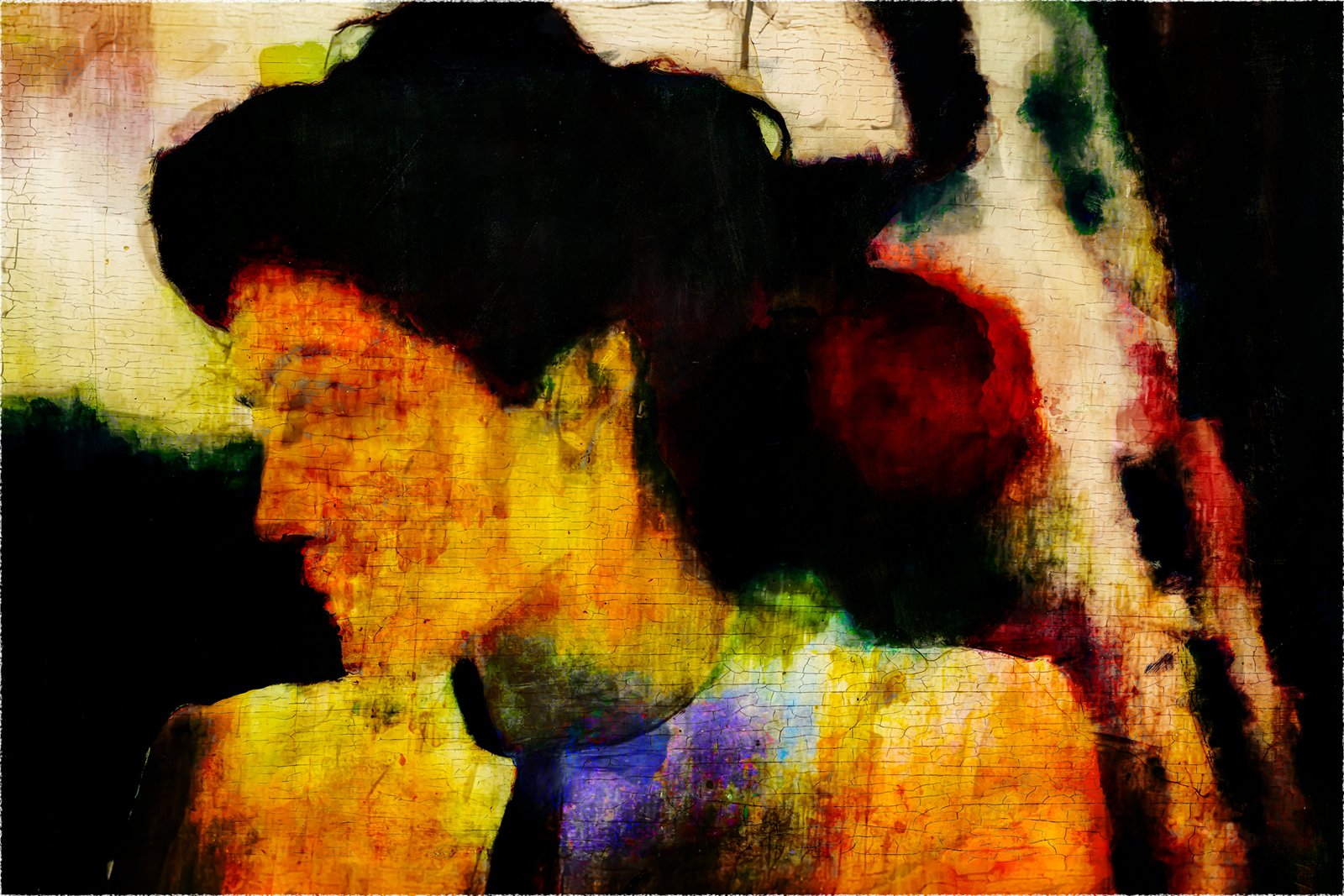
A contemporary artwork depicting a woman's head in profile in an atmospheric semi-abstract style
REPOSE: Edges soften and color quiets as she retreats into stillness.
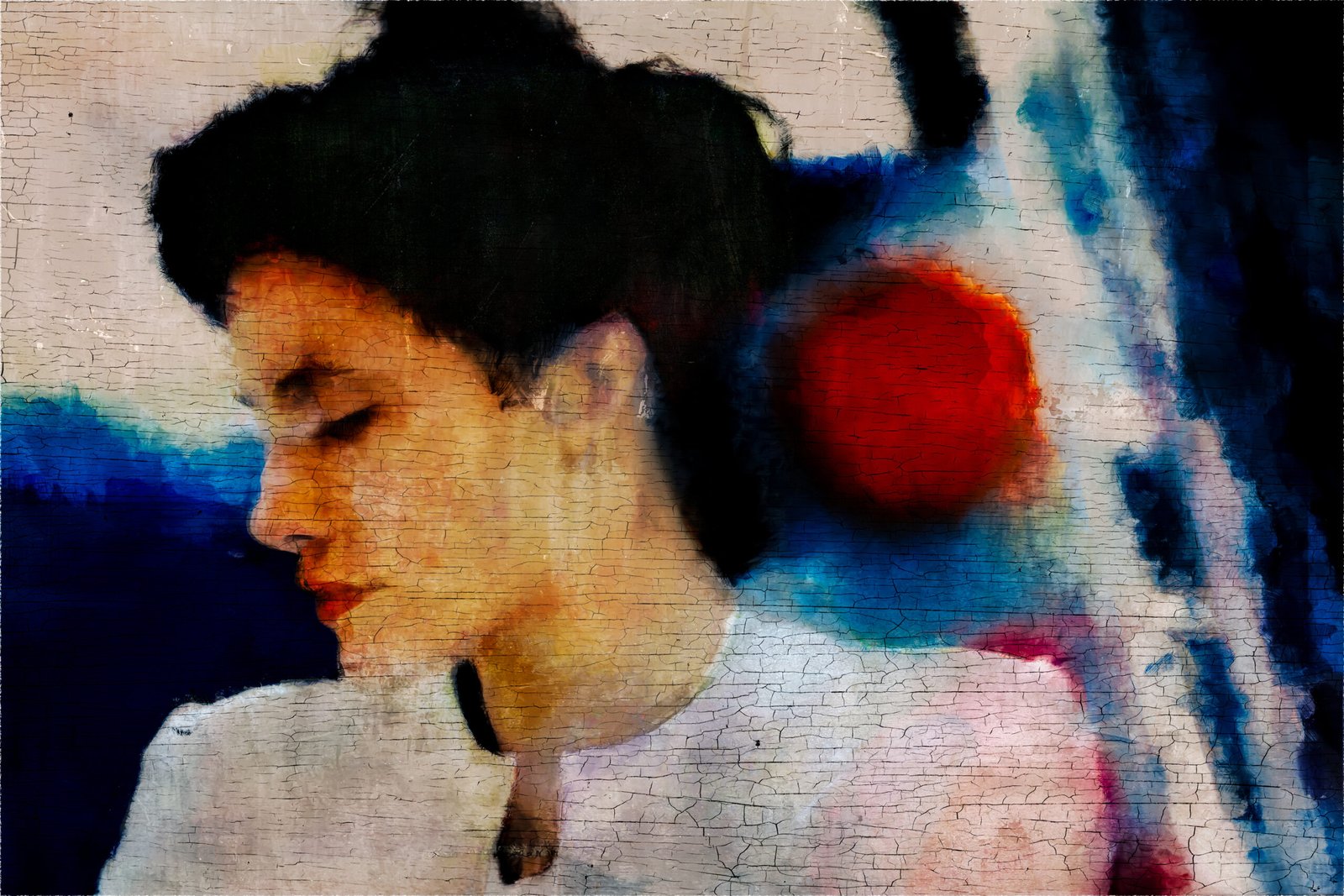
Facial features begin to dissolve as the figure drifts inward, no longer inhabiting the external world.
An abstract artwork depicting a woman's silhouette with color and texture
DREAM: The figure enters abstraction, having arrived in her atmospheric dreamstate.

As I continued working with the image, my focus shifted from representation to sensation. In Repose, the figure softens. Edges blur, the palette becomes more restrained, and her posture suggests release rather than alertness.

By Slumber, facial features begin to dissolve beneath layers of translucent color and texture. The image becomes less about likeness and more about the experience of letting go.

In the final iteration, Dream, the image approaches abstraction. The face is largely obscured, replaced by veils of color and atmosphere that suggest an interior state rather than a physical presence.

Though I never saw her drift into a dream state, as I finished the first piece, this is where I knew she wanted to be. Each successive image relinquishes detail in favor of mood, allowing the viewer to experience the transition rather than simply witness it. What begins as a moment observed from the outside becomes something intimate and universal — the quiet surrender of falling asleep in motion.

By progressively obscuring the figure, I invite the viewer to inhabit that moment themselves. The series doesn’t insist on a single story; instead, it offers a shared, familiar experience — the subtle pleasure of closing one’s eyes and drifting, carried forward by motion, memory, and imagination.

A Final Thought:
Crafting Experiences

This collaboration — with the artwork itself and with the viewer — lifts some of the creative burden. It turns the process into a shared journey rather than a solitary act of authorship.

Ultimately, my aim is not simply to create images, but to craft experiences: visual prompts that invite curiosity, projection, and reflection. Whether it’s a solitary figure moving through an unfamiliar city or a woman surrendering to rest in the back of a cab, each piece holds the potential for many stories.

That openness — the space between what is shown and what is imagined — is where the work truly comes alive. For me, it’s what makes both creating and living with art an endlessly engaging, human experience.

Related Posts

Buying Art with Purpose: Why Your Walls Need a Story

Most of us start buying art to fill blank walls, but what if you chose pieces that connect with your personal story? Art collecting is not just about aesthetics; it’s about discovery and connection. Each piece can evoke memories and emotions, enriching your life. Join a new generation of collectors who prioritize curiosity and start your journey of meaningful art collection today. Your walls deserve to tell a story—let’s begin it together.
Read More »
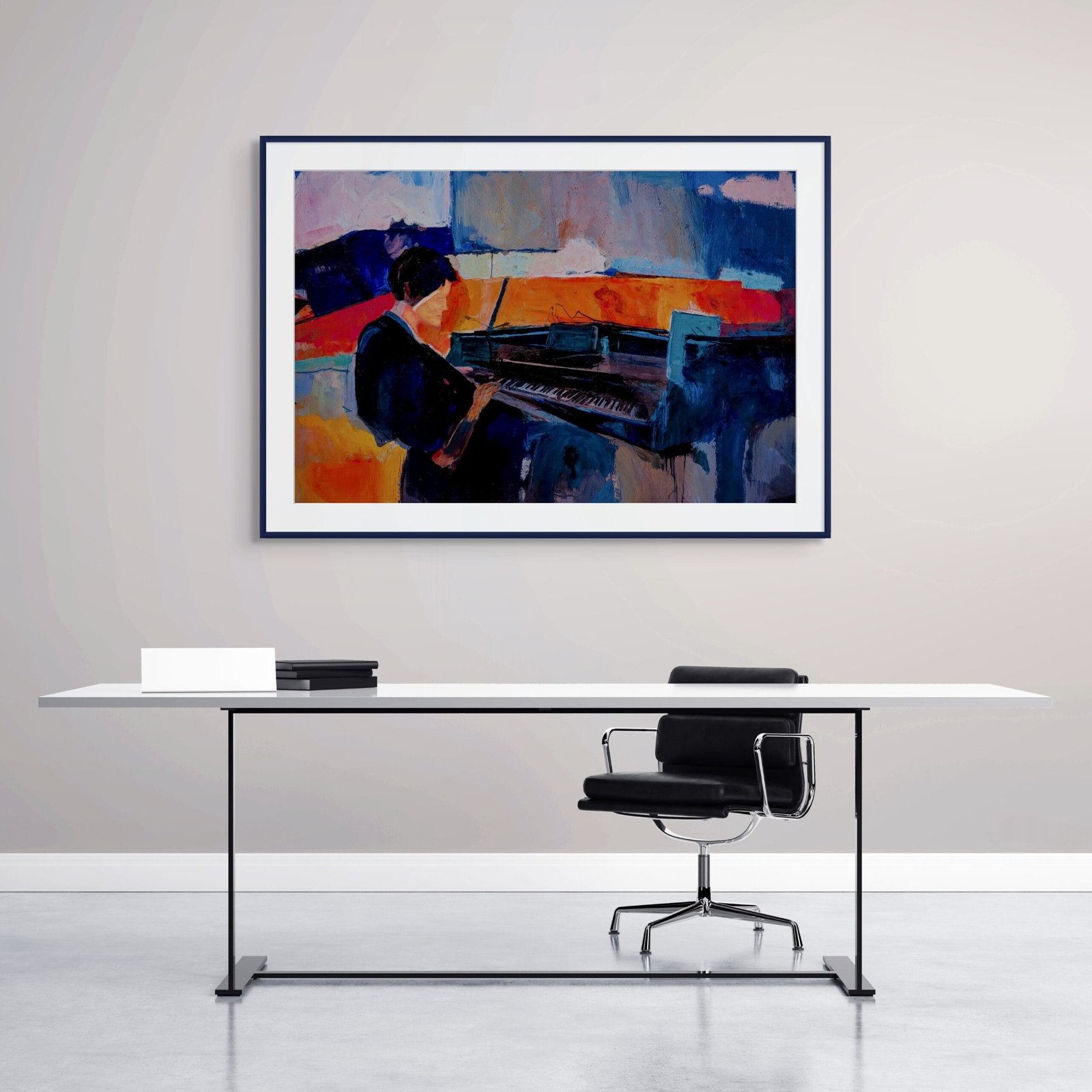
Modern Wall Art behind a home office desk

How to Choose Wall Art: A Guide for Modern Interiors

Most rooms begin with practical decisions — the sofa that fits, the table that works, the lighting that doesn’t compete with everyday life. But when people talk about a room they love, they rarely mention the furniture first. They talk about what the room feels like.
My background as an architect and hospitality design leader has taught me that affordable fine art prints, thoughtfully chosen and placed, can lend atmosphere, meaning, and lasting visual impact to everyday spaces.

Read More »