Buying Art With Purpose
Why Your Walls Need a Story

Most of us begin buying art for a simple, practical reason: there’s a blank wall that needs filling.

Perhaps you’ve just moved into a new apartment. Maybe you’re finally finishing a home office that lived too long with bare drywall. You find a piece that works with the sofa or echoes the color of the rug, hang it, and the room feels resolved. There is nothing wrong with this. Wanting a beautiful home is a perfectly reasonable—and deeply human—impulse.

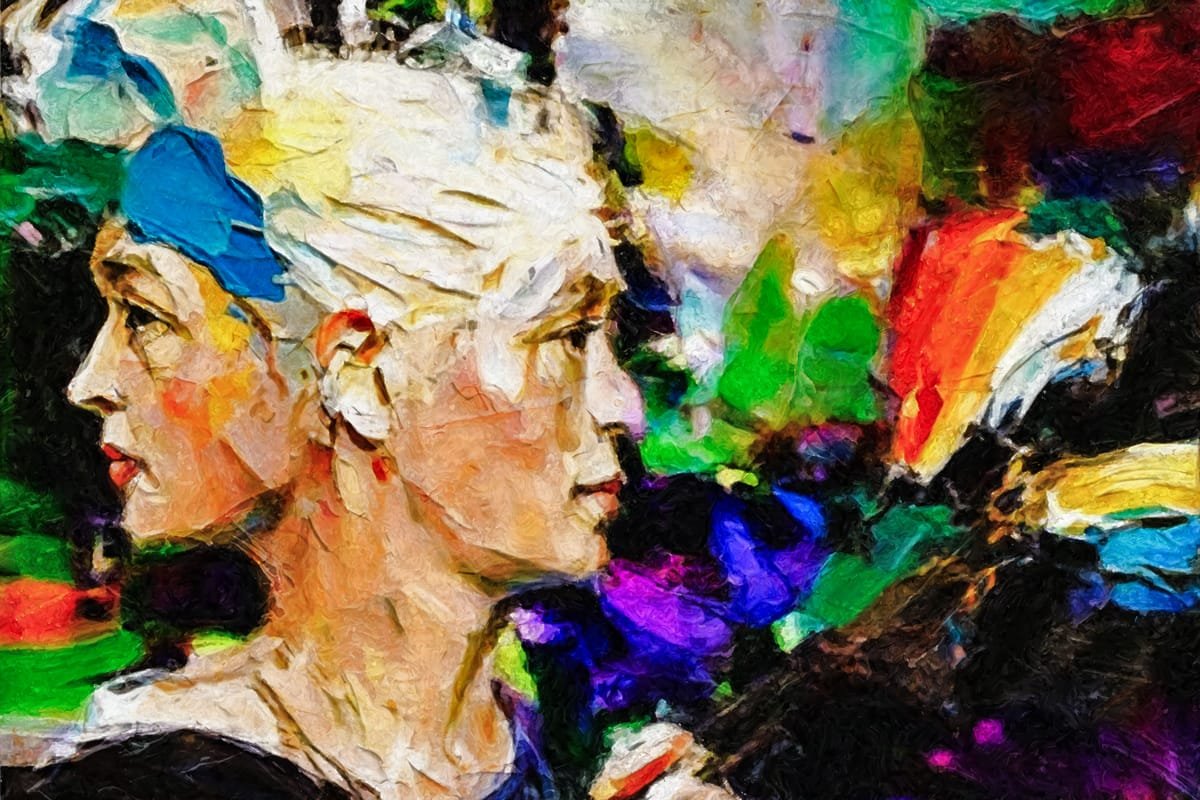
a colorful contemporary artwork depicting two women's heads superimposed on one another on a frenetic background
Works like 2 Posh Ladies' night-out invite viewers to project their own narratives, transforming a wall into something closer to a lived experience than a decorative surface.

Rethinking What It Means to Be a Collector

But something subtle happens when you stop buying art simply because it fits a space and start buying it because it fits you. Often, it begins not with certainty, but with the quiet thrill of encountering work that feels personal and slightly undiscovered.

That shift marks the quiet transition from decorating to collecting. It’s not announced. There’s no threshold to cross. Yet once it happens, the way you look at art—and live with it—changes entirely.

For many people, the word collector carries unnecessary weight. It conjures images of auction paddles, an erudite crowd, and price tags that feel untethered from reality. That image, while persistent, is also outdated.

Most of us have been collectors for far longer than we realize. We save objects because they hold meaning: ticket stubs from concerts, souvenirs from travels, books we cannot part with, objects that mark a particular chapter in our lives. These things aren’t valuable because they’re rare or expensive; they’re valuable because they tell a story that resonates with us.


Fine-art prints on large sheets of archival, mold-made papers offer many of the tactile and visual qualities of gallery work, without the barriers often associated with original artworks.

Collecting art is simply an extension of that instinct. It’s the act of choosing work not only because it complements a room, but because it evokes something—curiosity, recognition, memory, or mood. When you begin to approach art this way, its role shifts. It stops functioning as background and starts participating in your daily life, offering moments of reflection, familiarity, and quiet pleasure.

The Golden Ticket

One of the less often discussed pleasures of collecting art is the thrill of discovery.

Like teenagers who acquire an extremely rare Pokémon card or coin enthusiasts who come across a 1796 Draped Bust Quarter, seasoned art collectors often focus less about what they paid for a piece and more on how they found it. There is a particular satisfaction in encountering work before it circulates widely—before it appears on every major platform or becomes part of a familiar oeuvre.

In an era when nearly every artist has an online presence, discovery no longer requires insider access to galleries or fairs. It requires attentiveness. Many compelling artists work outside large marketplaces, choosing slower, more independent paths that allow their work to evolve without the pressure of constant visibility.

For new collectors, this presents an opportunity. Finding work that resonates deeply – and  – feels undiscovered, yielding a layer of meaning that extends beyond aesthetics. The artwork becomes not just something you love, but something that is the product of your unique curiosity.

Like a neighborhood restaurant known only to those who pay attention, the pleasure lies both in exclusivity and in recognition—the quiet confidence of knowing you found something worth keeping before that became obvious to everyone else.

A New Generation of Collectors

If you’re considering buying art online, you’re already part of a broader change in how people engage with art.

According to Artsy’s Art Collector Insights Report, more than 80 percent of Gen Z and Millennial collectors purchased art online in the past year. This generation isn’t waiting for institutions to validate their taste. They’re trusting their own responses—choosing work that resonates emotionally rather than intellectually, building collections that are personal, eclectic, and evolving.

What’s emerging is a more democratic model of collecting. One that values connection over credentials and curiosity over connoisseurship. In this context, collecting is not about expertise; it’s about attentiveness.

Beginning The Journey — Without Trepidation

Starting an art collection doesn’t require a large budget or a deep knowledge of art history. It requires a slight shift in how you look.

Instead of asking whether a piece will “work” in a particular spot, try asking different questions:

  • Does this piece hold my attention over time?
  • Does it suggest a story or mood I want to live with?
  • Does it feel familiar in a way I can’t quite explain?

Collections tend to grow organically when you allow these questions to guide you.

Mixing mediums is part of this process. A meaningful collection often includes a combination of original works, limited-edition prints, photography, and digital pieces. What unites them isn’t format or price, but the continuity of feeling they create over time.

And when possible, learn about the artist. Understanding why a piece exists—what prompted it, what it responds to—adds a layer of depth that no mass-produced print can replicate.

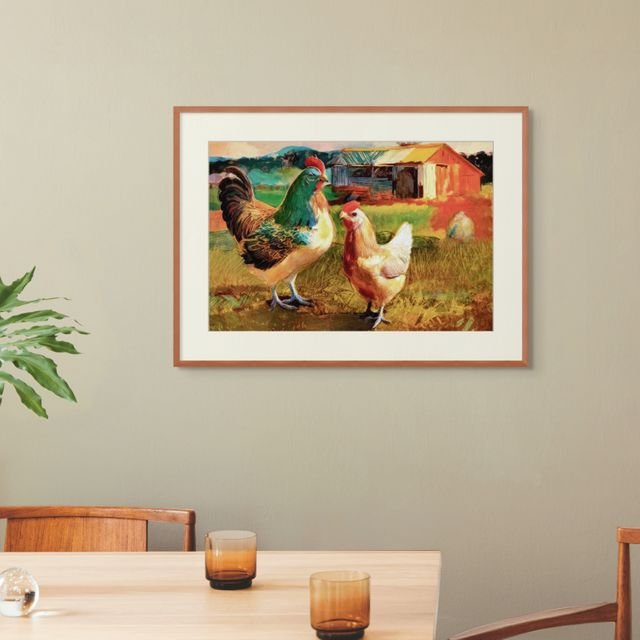
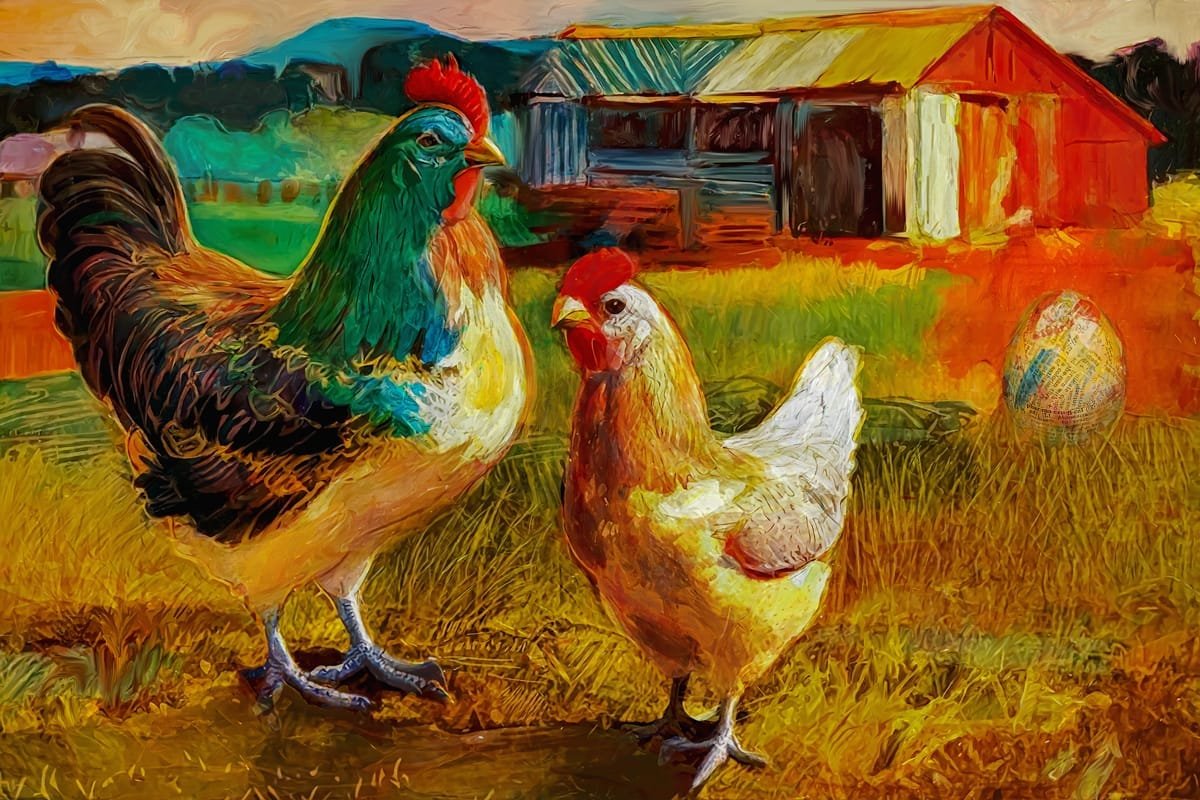
A colorful contemporary artwork depicting two chickens on a farm.
Knowing the narrative behind a work, such as the story behind "Chickens Escape" and the meaning of the papier-mâché egg in the background, can make all the difference.

Living with a Collection

The real reward of collecting art reveals itself gradually.

A decorated room looks complete. A collected space feels inhabited. Over time, the works you choose begin to converse with one another. They mark different periods of your life. Some grow more meaningful as your circumstances change; others simply offer a sense of continuity.

A decoration is something you glance at. A collection is something you return to.

Choosing What Belongs with You

The next time you find yourself scrolling through art, resist the urge to look only for something that matches the furniture. Look instead for something that feels quietly insistent—something that asks to be lived with rather than merely displayed.

You don’t need to be an expert. You don’t need permission. And you certainly don’t need to be a millionaire.

You only need to recognize the difference between filling a wall and beginning a story.

That recognition is where collecting begins.

Related Posts

Storytelling Shapes My Work

How artist David Faulkner uses storytelling to guide his artistic process —creating open-ended works that invite viewers to project their own stories and meanings into his work.

Read More »